 By Admin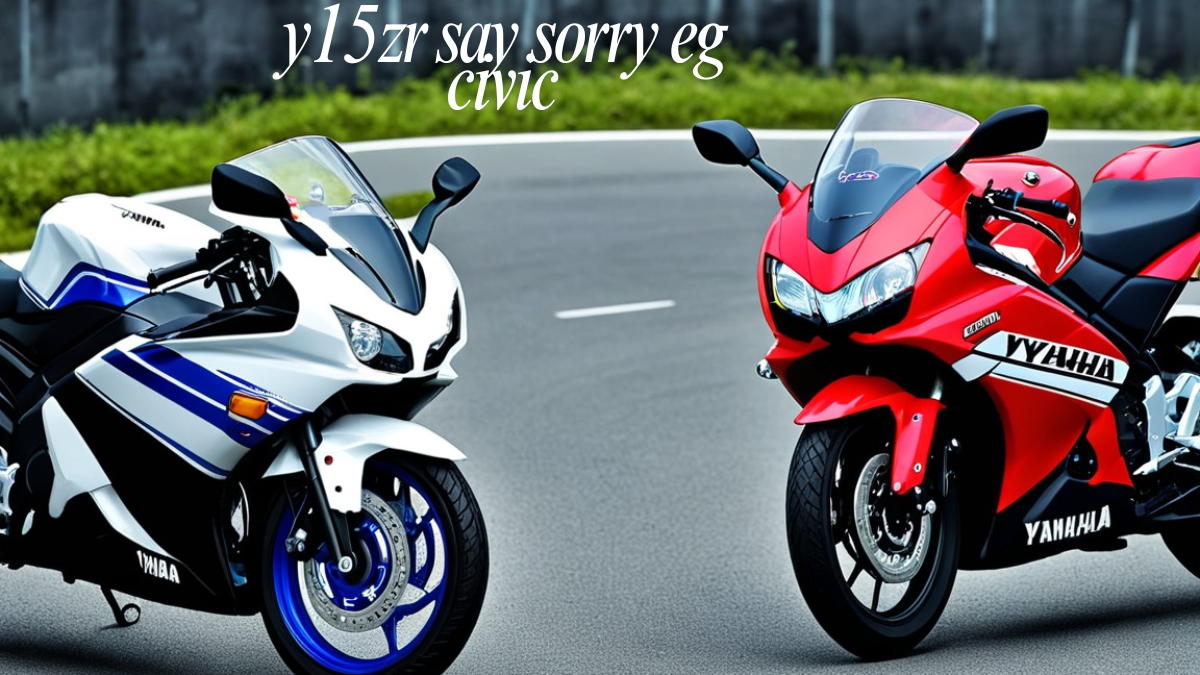
In today’s fast-paced world, communication has evolved far beyond words. Sometimes, what we drive and how we express ourselves through our machines speaks louder than a long apology letter. For many people—especially among youth in Southeast Asia—vehicles like the Yamaha Y15ZR and the Honda Civic EG are not just modes of transport. They are extensions of personality, freedom, and even emotional expression.
This article explores a rather unusual but increasingly popular trend: using bikes and cars symbolically to say sorry—particularly in situations where words fall short. Whether it’s making amends after a fight, expressing regret after a mistake, or trying to win someone’s heart back, phrases like “Y15ZR say sorry EG Civic” are gaining attention on social media. But what do they really mean?
Let’s dive into the culture behind these machines, and how they’re being used in powerful ways to say “I’m sorry.”
The Power of Symbols: When Vehicles Speak Louder Than Words
Apologies are never easy, especially when feelings are involved. In many Asian communities, where emotional restraint is often encouraged, people—particularly men—sometimes find it hard to say “sorry” directly. That’s where symbolism comes into play.
Enter the Yamaha Y15ZR, also known as the “King of the Road” in Malaysia, and the Honda Civic EG, a 90s icon that still carries deep emotional and street value. These vehicles are more than machines; they’re status symbols, emotional outlets, and in many cases, tools for communication.
So when someone says “Y15ZR say sorry eg Civic”, they’re not just being random or playful—it’s a coded language. A Y15ZR represents urgency, energy, and raw youth, while the Civic EG symbolizes depth, class, and emotional stability. Using both in the same sentence is like saying:
“I’m saying sorry with both fire and heart—fast like the Y15ZR, but deep like the EG Civic.”
🏍️ Y15ZR: The Apology of Speed, Youth, and Passion
The Yamaha Y15ZR is a beloved underbone motorcycle popular across Malaysia, Indonesia, and the Philippines. Often ridden by young people, it’s known for its sporty look, loud exhaust mods, and agile performance. But behind all the speed lies a cultural phenomenon: the Y15ZR is often used as a gesture of care.
Here’s how:
- Late-night ride to deliver food after a fight
- Showing up unannounced with a helmet for two
- Revving outside someone’s house (a little annoying but culturally symbolic!)
- Delivering handwritten notes or gifts via the under-seat compartment
In these cases, the bike itself becomes a messenger of apology. The act of riding across town just to show you care is often enough to soften someone’s heart.
So when someone refers to a “Y15ZR say sorry”, they’re talking about a gesture-driven apology—where effort, movement, and presence matter more than verbal eloquence.
Civic EG: A Classier, Deeper Way to Say Sorry
Now, contrast that with the Honda Civic EG, an older model that’s still loved for its clean lines, responsive performance, and emotional nostalgia. Often owned by those in their mid-20s to 40s, the EG Civic carries a different kind of emotional weight.
Saying sorry through a Civic EG might mean:
- Showing up in person instead of sending a message
- Offering a long, calm drive to talk things out
- Picking someone up after a fight just to share silence in the car
- Fixing or tuning the car together as a bonding ritual
There’s something heartfelt about using a Civic EG to apologize. It’s not flashy or aggressive—it’s thoughtful. When someone says “EG Civic say sorry,” they often mean “Let’s fix this with maturity and emotional depth.”
So when the phrase flips into “Y15ZR say sorry eg Civic“, it’s like combining two emotional speeds: fast and fiery regret, paired with calm and composed reconciliation.
When Words Fail, Machines Speak
Why would someone even go through the trouble of using a vehicle to say sorry?
Simple. Not everyone is good with words. In cultures where emotional expression is subdued, especially among men, actions tend to carry more weight than verbal apologies. And when someone uses their prized possession—a bike or car—to express regret, it shows vulnerability.
Let’s say you’re in a relationship and things go south. Rather than sending a bland “sorry” text, someone rides over 10 kilometers in the rain on their Y15ZR just to stand outside your house. Or maybe they drive their Civic EG to your workplace, wait hours in the parking lot, and offer to take you for a coffee—no pressure, just presence.
These aren’t just stunts. They’re acts of emotional labor using machines.
That’s why online expressions like “Y15ZR say sorry eg Civic” have gained traction. They’re modern-day haikus of emotion, combining material culture with human feeling.
Social Media and the Rise of Symbolic Apologies
Instagram, TikTok, and Facebook are full of short clips where people show off their vehicle as part of a love story—or apology arc. The Y15ZR is often featured in romantic or regretful montages:
- “I broke her heart. Y15ZR brought me back.”
- “She blocked me. I showed up on my Civic EG and waited.”
- “Actions speak louder than texts.”
These captions often blend regret with pride. They acknowledge the mistake but also show that the person is willing to go the extra mile—literally.
The phrase “Y15ZR say sorry eg Civic” often appears in these contexts, acting as a shorthand to convey:
- Youthful passion (Y15ZR)
- Emotional maturity (EG Civic)
- The need to make things right
It’s beautiful, poetic even—how metal, rubber, and engines can become instruments of emotional healing.
Maintenance and Forgiveness: The Metaphor Goes Deeper
Interestingly, both the Y15ZR and Civic EG require regular maintenance. This is often mirrored in relationships.
Just like bikes and cars need oil changes, tune-ups, and tire checks, relationships need communication, care, and honesty. Using these machines as tools to say sorry subtly suggests that:
“I know things went wrong. Let’s fix them—together.”
Imagine saying something like:
“I neglected the Civic once, and it stalled on me. Just like I neglected your feelings. But I learned my lesson. I’ll never skip maintenance again—on the car or on us.”
It’s sincere. It’s relatable. And it resonates deeply—especially for those who pour their identity into these machines.
Final Thoughts: The Language of Motion and Emotion
At the end of the day, whether you’re riding a Y15ZR at full throttle to show you care or cruising calmly in a Civic EG to mend emotional wounds, the message is the same: “I’m sorry. I care. Let’s talk.”
The phrase “Y15ZR say sorry eg Civic” might look quirky at first glance, but it’s actually a beautiful example of how people use what they love to express what they feel.
And maybe that’s the lesson for all of us. You don’t always need fancy words to apologize. Sometimes, it’s the journey—not the destination—that speaks the loudest.
Frequently Asked Questions
Q: Is it common to use vehicles like Y15ZR or Civic EG to say sorry in real life?
Yes, especially in Southeast Asia. Bikes and cars are often used as symbolic gestures of affection, apology, and presence. It’s part of a larger culture where emotional expression happens through action more than words.
Q: Can this kind of apology replace verbal communication?
It can support it, but not replace it entirely. A good apology includes both action and acknowledgment. Using your Y15ZR or Civic EG to show up matters—but so do the words you eventually say.
Q: What if I don’t have a fancy bike or car?
It’s not about the vehicle—it’s about the effort. Even borrowing a friend’s ride or taking a long walk can show sincerity. What matters is that you show up, listen, and mean what you say.
[…] signature style lies in this balancing act: between precision and ambiguity; structure and improvisation; individual voice and collective experience. […]
[…] endurance across cultures lies in his rich symbolism. He embodies several timeless ideas that speak to the human […]