 By Admin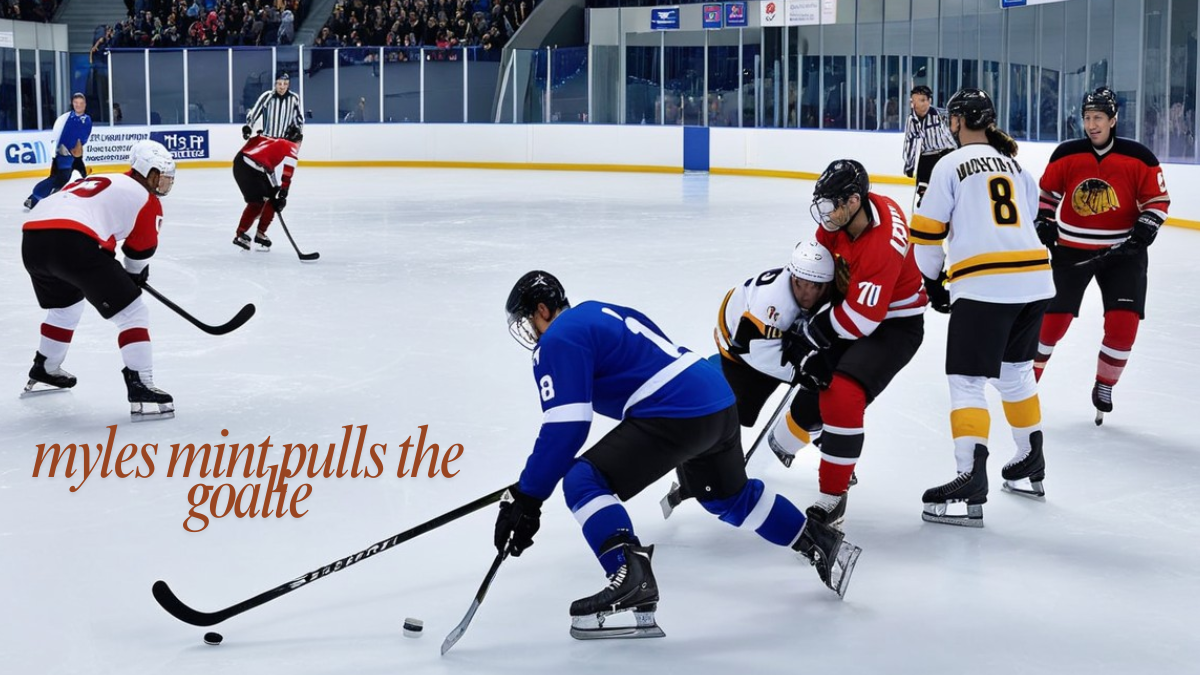
In the theater of high stakes, there is one moment that always arrests attention: when someone abandons safety to go all in. In ice hockey, that moment is when a coach “pulls the goalie” — trading defense for offense in the final minutes of a match. But in sports lore and metaphor today, one name has come to represent that moment of daring: Myles Mint pulls the goalie. It’s a phrase, a story, and a mindset that crystallizes risk, courage, and the willingness to gamble everything when it counts.
In this article, we’ll explore:
- What “pulling the goalie” means and how it evolved in hockey
- Who Myles Mint is (or represents) and why the phrase matters
- The strategy, timing, and calculation behind the bold move
- Risks, rewards, failures, and lessons
- How “pulling the goalie” became metaphor — in business, life, art
- How to channel the Myles Mint mindset (and when not to)
- Legacy and final reflections
1. Pulling the Goalie: Origins and Definition
The Classic Hockey Gambit
In ice hockey, “pulling the goalie” refers to the tactic where a coach removes the goaltender and replaces them with an extra skater (attacker). The idea is simple yet daring: when you’re trailing late in the game and time is running out, you give up defense in hope of increasing offensive pressure and scoring a tying goal.
The moment is dramatic:
- The net sits empty, unprotected.
- Your team has a manpower advantage (more attackers vs. defenders), but with far more risk.
- A turnover, a mistake, a loose pass — any of those may lead to an opposition goal into the empty net.
- But if it works, it changes the narrative: from defeat to possibility.
For decades, coaches hesitated to use it, fearing the embarrassment of an empty-net goal. Over time, analytics and a shift in philosophy have pushed more aggressive use in the closing minutes of close games. The move is now a standard part of the high-pressure toolkit in hockey, especially when trailing by one goal in the final minute or two.
Why It’s So Electrifying
There are few plays in sports that combine strategy and spectacle so viscerally. The crowd, players, and bench know: the game’s fate hinges on this decision. It’s a moment that forces extremes. It exposes flaws, maximizes urgency, and compresses drama.
But more than that, as we’ll see, it transcends the rink. It becomes a metaphor, and for some, Myles Mint becomes its avatar.
2. Myles Mint: Symbol or Strategist?
Who Is Myles Mint?
In conventional sources, “Myles Mint” doesn’t refer to a famous NHL superstar or legendary coach. Instead, the name has emerged in fan culture, commentary spaces, and memes as the face of the bold, almost reckless decision to “pull the goalie.” Myles Mint is more archetype than real individual — a persona representing the one who dares the impossible in the final seconds.
It’s possible that in local or amateur hockey leagues, there is or was a real Myles Mint whose bold calls caught attention, and over time his name morphed into legend. But in most public discourse today, invoking Myles Mint is shorthand for “go for broke.”
Why That Name Stuck
- Memorability: The alliteration and the uniqueness of “Myles Mint” make it easy to recall.
- Myth‑making: Fans love stories. A coach or player who repeatedly takes audacious risks becomes a living tale.
- Metaphor transfer: Because the phrase is catchy, it adapts well beyond hockey (business, life, strategy).
- Cultural shorthand: Saying “pull a Myles Mint” or “Myles Mint pulled the goalie” instantly communicates a daring move — without needing context.
Thus, Myles Mint is both a name and a concept: the strategist who refuses safe bets, the figure who makes the call when others shrink.
3. The Strategy Behind the Bold Move
If you want to “Myles Mint Pulls the Goalie” in any domain (sports or otherwise), you don’t just act recklessly — you weigh factors, take timing into account, and manage trade‑offs. Let’s break down what makes the gamble smart (or foolish).
Key Variables to Consider
- Time Left & Game Situation: The closer you are to the end, the more justified the gamble. If you’re down by one goal with only a minute left, playing safe often means defeat. Waiting too long eliminates your chance, but pulling early gives more opportunity — yet more exposure.
- Score Differential & Margin: Trailing by one is the classic scenario. Down by two might necessitate an earlier pull, but the margin of error is higher. Up by one? You rarely pull the goalie — you defend.
- Momentum & Puck Control: If your team is dominating puck possession, creating chances, and pushing offensively, you’re in a better position to risk it. If you’ve had the puck mostly on the other side, a turnover is more likely.
- Opponent’s Strength & Readiness: If the opposition is practiced at defending the extra attacker or shifting defensively, your window might be narrower. Some defenses are prepared to exploit the empty net quickly.
- Player Fatigue & Substitution Depth: If your skaters are exhausted, the extra attacker may struggle to keep pace. If you have fresh legs, that may tip the odds.
- Psychological Effect / Momentum Shift: The move itself can disrupt the opponent’s rhythm, rattle defenders, or inject adrenaline into your side. Sometimes the intimidation or surprise factor helps.
Optimal Timing: Traditional vs. Analytics
In older coaching philosophy, the guardrails were strict: don’t pull until the final minute or 90 seconds. The risk of conceding an empty-net goal seemed too great otherwise.
But modern statistical models suggest pulling earlier can increase your chance of scoring enough to tie. Some coaches now explore pulling even with 2:30–3:00 left in certain situations, relying on possession data and scoring probabilities.
Still, analytics can’t predict every bounce, deflection, or misplay. A coach must balance data with intuition and situational awareness.
When to Avoid Pulling
- When you’re already down by multiple goals with little time — the move becomes desperation without much upside.
- When your team is under heavy pressure, giving the puck away in your defensive zone regularly.
- Against defenses known for quick clearances, strong transition defense, or skilled breakouts.
- If your players are fatigued, injuries are mounting, or discipline is shaky.
4. Consequences, Failures & Lessons
Every bold move carries risk, and many “pulls” fail. But it’s how you manage those failures (and learn) that defines mastery.
Notable Failures & Empty-Net Disasters
- The most obvious danger: the opposing team capitalizes on a turnover and shoots into the open net. That’s the version of “pulling the goalie” that critics love to cite.
- Situational misreads: sometimes the timing was off, the player shifts missed, or the puck change happened under duress.
- Reputational backlash: media, fan, or board scrutiny often falls on the coach, especially if the move seems untimely.
- Morale hit: players may second‑guess calls, lose confidence, or feel the gamble cost them credibility.
When It Succeeds Dramatically
- The tying goal arrives, momentum surges, and you force overtime.
- The opponent is destabilized, making unforced errors under pressure.
- You pull off the comeback, and the narratives build — “they never gave up,” “bold to the end,” etc.
- It becomes a teaching moment: risk with awareness pays dividends.
What Differentiates Good from Reckless
- Preparation: successful execution often comes with practice (e.g. extra attacker drills, rehearsed patterns).
- Situational awareness: real-time read of puck possession, matchups, and opponent fatigue.
- Communication: players must understand positioning, when to rotate, and how to crash the net.
- Adaptability: if the play isn’t working, you must reset quickly before a turnover becomes disaster.
- Accountability: owning outcomes (success or failure) builds credibility.
5. Beyond Hockey: The Metaphor of Pulling the Goalie
Because the phrase “Myles Mint pulls the goalie” is so evocative, it now travels far beyond ice rinks. It surfaces in conversations about business, startups, careers, creative ventures, and personal challenges. Let’s see how.
Business & Startup Risk
In business, “pulling the goalie” means investing all your resources into a last‑ditch product, pivot, or marketing push. It might be launching a risky feature right before market close, doubling down on one bet, or burning reserves for one final chance.
When you hear of a small company going “all in” on a new vertical, or shutting down others to focus on one key bet, that’s often a business version of pulling the goalie.
Creative / Artistic Projects
Writers, filmmakers, artists frequently talk of going “full tilt” on a project — pouring hours, money, energy into one bold attempt. When options have dwindled and the only way forward is bold commitment, that’s “Myles Mint mode.”
Personal & Life Decisions
Sometimes in life you face a moment where safety feels like stagnation. Changing careers, moving cities, starting or ending relationships — each can be a scenario where you must “pull the goalie.” You leave security behind to chase possibility.
When people say, “I pulled a Myles Mint,” they mean they risked something comfortable to access something potentially life-changing.
Advantages of the Metaphor
- It sums the stakes in a compact phrase.
- It resonates emotionally because sports is familiar.
- It encourages boldness — a psychological push to make those thorny decisions.
- It frames the gamble not as reckless, but as calculated, courageous.
But like in hockey, the metaphor carries warnings: don’t use it indiscriminately. The context matters.
6. How to Channel the Myles Mint Mindset (Wisely)
If you admire the daring spirit of “pulling the goalie,” here’s how to adopt it responsibly — so you tip the odds toward success instead of disaster.
Gauge When It’s Time
- You’ve tried safer alternatives already and they failed or stalled.
- The remaining window is closing fast — time is your enemy.
- You have data, insight, or momentum that suggests possibility.
- Your fallback options are limited; playing safe guarantees loss.
Plan the Execution
- Rehearse your “extra attacker” plays (in whatever domain).
- Ensure your team (partners, staff, collaborators) knows the roles, risks, and fallback.
- Set guardrails: limit exposure if the move starts failing.
- Have contingency and fallback plans — so you can reset if the gamble doesn’t land.
Accept Responsibility, Win or Lose
- If it fails, own it — learn from it.
- If it succeeds, analyze why so you can replicate or improve.
- Don’t blame circumstances; assess decision, timing, execution.
- Build resilience — because boldness often means swallowing failure too.
Know When Not to Pull
- When you have time for more incremental gains.
- When the upside is low and the downside catastrophic.
- When your team isn’t aligned or prepared.
- When you lack conviction or clarity on execution.
In short: don’t “pull the goalie” just for spectacle. Do it when the context demands urgency, and when bravery aligns with logic.
7. Legacy, Culture & Why the Phrase Endures
Why has “Myles Mint pulls the goalie” become such a resonant phrase? Because it captures something fundamental about human struggle: the moment when you stop hedging and commit, when you trade certainty for possibility.
- Cultural resonance: In competitive environments — sports, business, life — everyone knows the tension of that last-minute push.
- Narrative power: Stories favor climaxes, turning points, and acts of heroism. This phrase frames your decision as drama.
- Memetic utility: It’s concise, evocative, and applicable in many contexts.
- Emotional pull: It encourages action. It challenges comfort zones.
- Shared shorthand: Saying “pull a Myles Mint” or “he pulled the goalie” communicates strategy, daring, and guts in one.
In team sports, coaches and fans debate endlessly about whether a particular pull was wise or foolish. In life, we rarely get second chances. That tension makes the metaphor vivid.
Final Thoughts
“Myles Mint pulls the goalie” is more than just a sports metaphor; it’s a lesson in audacity, timing, and the tension between safety and opportunity. Whether or not Myles Mint is a real coach or player, his name has grown into an emblem of boldness — the one who refuses to let the clock define them.
In games, pulling the goalie is a gamble. Sometimes it fails spectacularly; sometimes it sparks unforgettable comebacks. In life, the same is true. But when the moment comes, when you’re down and time is slipping, sometimes the only path to possibility is to sacrifice security for momentum.
So, next time you face a moment with little margin, little room — ask yourself: is this when I pull the goalie? Will I channel that Myles Mint spirit and stake everything? Because sometimes, that final push is the difference between living cautiously and daring greatly.
[…] in the stadium made it clear this would not be a slow, defensive grind. Both teams were ready to push the ball, and the early drives proved that point quickly. The Falcons opened with an aggressive approach, […]