 By Admin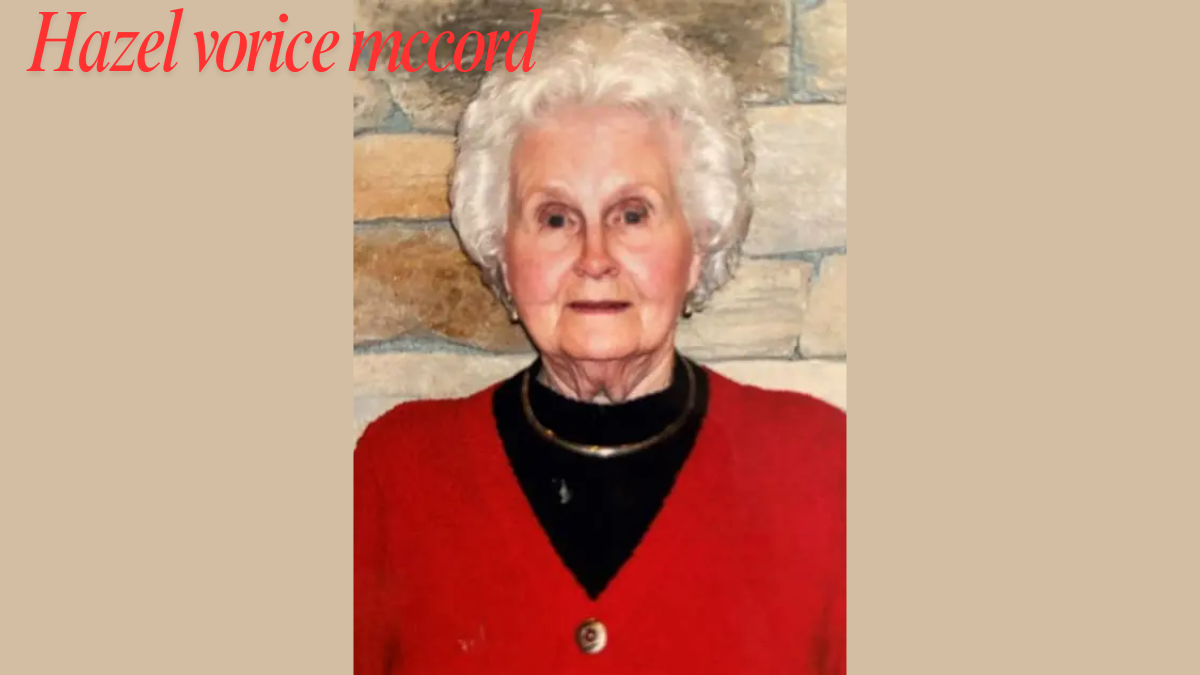
In the tapestry of American life, not every thread shines under the spotlight — yet some of the most enduring are the ones woven quietly, steadfastly, over time. Hazel Vorice McCord was one such thread. Her story may not be written in history books, but it lives in the hearts of those who knew her, in the homes she helped build, and in the values she passed on.
She was not a celebrity, a politician, or a historical figure by conventional standards. She was something greater — a living testament to the quiet power of ordinary people navigating extraordinary times.
Through the Great Depression, wartime uncertainty, postwar prosperity, and the rapid social changes of the 20th century, Hazel Vorice McCord embodied resilience, compassion, and a steadfast belief in the strength of family. Her life offers a mirror through which we can see the countless, often-unsung women who carried families, communities, and generations on their backs — one meal, one prayer, and one lesson at a time.
Early Life: Roots in Hard Soil
Born in the early 1900s — an era defined by simplicity and struggle — Hazel Vorice McCord entered a world still finding its modern identity. America was a country of contradictions: vast opportunity paired with stark inequality, technological innovation side by side with rural hardship.
Hazel grew up in a small Midwestern town where farms dotted the horizon and neighbors knew one another by name. Life was not easy, but it was rooted in community. The McCords were known for their hard work, faith, and quiet dignity.
From a young age, Hazel learned the rhythms of a household that depended on self-reliance. Her days began early — tending to chores, helping her mother in the kitchen, learning the delicate balance of thrift and generosity. It was a world where every resource was cherished, every garment mended, every scrap of food stretched into a meal.
Those formative years shaped Hazel’s understanding of perseverance. Hard work wasn’t a choice — it was a way of life. And though money was scarce, love and laughter were abundant.
She would later tell her children, “You can live through anything, as long as you don’t lose your kindness.”
It was a mantra that became the foundation of her character.
The Great Depression: Strength in Scarcity
When the Great Depression struck in 1929, Hazel was a young woman entering adulthood. Across America, dreams shattered overnight. Jobs disappeared, savings evaporated, and breadlines became a haunting symbol of the era.
For Hazel, those years were defining. She had just begun building her own life — working part-time in a local store and helping support her family — when the economic collapse hit home.
Yet amid the uncertainty, she found purpose. Like many women of her generation, she became the quiet architect of survival.
She learned to stretch ingredients to feed a household. She took in sewing for neighbors to earn a few extra dollars. When others despaired, Hazel baked bread, organized potlucks, and kept spirits high with her soft-spoken optimism.
People who knew her then said Hazel never complained. Instead, she found small joys — in the laughter of a child, the warmth of a fire, the comfort of a shared meal.
Those who gathered around her table didn’t just find food; they found hope.
That era, harsh as it was, forged Hazel’s resilience. She understood that life’s challenges were temporary, but one’s integrity and compassion were permanent.
Love and Partnership: Building a Family Foundation
Somewhere amid the uncertainty of those years, Hazel met the man who would become her lifelong partner. Their courtship was simple — letters exchanged, church dances attended, long walks beneath the open sky.
When they married, it wasn’t with extravagance but with deep faith in each other and the future they hoped to build.
Together, they started a family in an era when the concept of “home” carried profound meaning. Theirs was a home not of grandeur but of warmth — a place where values were lived, not preached.
Hazel poured her energy into creating stability. She believed that love was not only expressed through words but through small, consistent acts of care. Clean laundry hanging in the sun, a warm meal at dusk, a comforting hand on a fevered forehead — these were her love letters to her family.
She often said, “Home is the one place you should always feel safe.” And indeed, under her roof, safety was not a privilege — it was a promise.
World War II: Courage on the Home Front
When World War II erupted, Hazel’s world shifted again. Her husband, like millions of others, was called to serve, leaving her to manage the household and raise children alone.
The war years were filled with uncertainty and sacrifice. Food rationing, shortages, and sleepless nights became the new normal. Letters from overseas arrived sporadically, carrying both relief and fresh waves of anxiety.
But Hazel never faltered.
She grew vegetables in her backyard victory garden, patched clothes until they were threadbare, and volunteered at the local Red Cross chapter. In those years, she became not just a mother but a symbol of steadfast courage for her community.
Neighbors recall that her home remained a gathering place even during the hardest times. Widows, young mothers, and lonely elders found comfort in Hazel’s calm presence.
She would host Sunday suppers where people shared news, prayed for loved ones abroad, and drew strength from each other’s company.
Hazel’s resilience wasn’t loud or performative — it was quiet, grounded, and deeply human.
Her children later remembered her as “the kind of woman who never cried in front of you, but you knew she did when she thought no one was looking.”
Postwar America: Rebuilding and Renewal
When the war ended, joy flooded the streets — but recovery was slow. Soldiers returned home changed, communities evolved, and women who had held the country together were expected to quietly return to domestic life.
Hazel navigated that transition with grace. She welcomed her husband home and helped him rebuild his footing in civilian life, but she also maintained the independence she had cultivated during his absence.
The postwar years brought new challenges — the pressures of modernization, the emergence of suburbia, and the cultural shifts of the 1950s and ’60s. But Hazel embraced change with adaptability.
She took pride in her children’s education, encouraged them to dream bigger than she had been able to, and taught them that self-worth came not from possessions but from purpose.
Though she never sought recognition, Hazel was the invisible backbone of every success her family achieved. She celebrated others’ milestones more than her own, finding fulfillment in watching her children and grandchildren thrive.
To her, family wasn’t just blood — it was legacy.
The Quiet Matriarch: Leading Without a Spotlight
As the years passed, Hazel became the quiet matriarch of an expanding family. Holidays at her house became a cherished tradition — tables overflowing with food, laughter echoing down hallways, stories of the “old days” passed from one generation to the next.
She was known for her steady hands — in the kitchen, in the garden, and in the emotional lives of those she loved.
Her wisdom was never delivered in lectures but in small, memorable phrases. “Patience is cheaper than regret.” “Kindness costs you nothing but pays forever.” “Don’t waste your days being afraid.”
Hazel had an extraordinary ability to make people feel seen. Grandchildren remember how she listened — truly listened — when they spoke. Her attention was her greatest gift.
And though she lived a modest life, her influence rippled outward. Former neighbors, now adults, still recall her as “the woman who helped everyone, even when she had little to give.”
Living Through Change: A Century in Motion
Hazel Vorice McCord’s lifetime spanned one of the most transformative centuries in human history. She witnessed the transition from horse-drawn wagons to automobiles, from handwritten letters to telephones, from black-and-white radios to television screens — and eventually, the first glimpse of computers.
She watched as women gained the right to vote, as civil rights movements reshaped society, as the world grew more interconnected and fast-paced.
Yet through all the upheaval, Hazel remained grounded in her core values — compassion, humility, faith, and family.
Change, she believed, was inevitable — but character was a choice.
Even in her later years, when the world seemed to move faster than ever, she never lost her curiosity. She asked questions about new inventions, read newspapers religiously, and kept her mind active. “You’re only old,” she once said, “when you stop wanting to learn.”
The Legacy She Left Behind
Hazel passed away surrounded by family — quietly, peacefully, as she had lived. But her presence lingers in every person she touched.
Her descendants carry her spirit in countless ways — in the way they raise their own children, in their work ethic, in their kindness toward strangers.
Some of her grandchildren became teachers, others nurses or engineers — each of them echoing her example of service and dedication in their own ways.
At family reunions, stories about Hazel still flow as easily as the laughter. Someone always recalls her cornbread, another remembers her garden, and someone else mentions how she could calm a storm with just her voice.
Her legacy is not measured in wealth or fame but in something far more lasting — the strength she cultivated in others.
She taught generations that real power doesn’t always announce itself. Sometimes it’s found in the steady hand that mends, the patient heart that forgives, and the unwavering love that holds a family together through time.
The Meaning of Resilience
In today’s world — where noise often drowns out depth and attention spans are fleeting — Hazel Vorice McCord’s story reminds us of the beauty of quiet strength.
Resilience, in her life, wasn’t about stoicism or denial. It was about choosing grace in difficult moments, finding purpose in routine, and loving without conditions.
She endured hardships her descendants will never fully know, yet she never became hardened by them. Instead, she turned her pain into compassion.
Hazel’s brand of resilience wasn’t glamorous; it was real. It was built on showing up, day after day, for the people she loved — even when no one applauded.
Why Stories Like Hazel’s Matter
In a time obsessed with fame and visibility, the legacy of someone like Hazel Vorice McCord can seem quiet — but that quietness is exactly what gives it power.
For every headline-making figure, there are millions of women like Hazel whose quiet strength built the foundation of modern life. They raised families, supported communities, and carried traditions forward through eras of uncertainty.
Without them, the world as we know it wouldn’t exist.
To remember Hazel is to honor them all — the grandmothers, mothers, aunts, and neighbors who stitched the social fabric of a changing nation.
Their names may not appear in history books, but their impact is written in the character of those they shaped.
Conclusion: The Grace of the Ordinary Extraordinary
Hazel Vorice McCord’s life was not defined by grand achievements or public acclaim. It was defined by love — quiet, steady, and unconditional.
She was the type of woman whose presence turned a house into a home, whose patience turned hardship into lesson, and whose faith turned uncertainty into hope.
Her story is a reminder that greatness often wears humble shoes.
In every generation, there are people like Hazel — the quiet heroes who hold families together, who nurture, who endure, who forgive, who lead without ever raising their voice.
They may not seek recognition, but they leave behind something greater: a legacy of integrity, tenderness, and timeless resilience.
So when we speak of Hazel Vorice McCord, we speak of every woman who faced a century’s worth of change and met it with grace. Her name is not just a memory — it is a symbol of what it means to live meaningfully, love deeply, and endure silently.
And though the world continues to spin faster, her legacy remains steady — like a candle glowing in a window, quietly lighting the way for those who come after.