 By Admin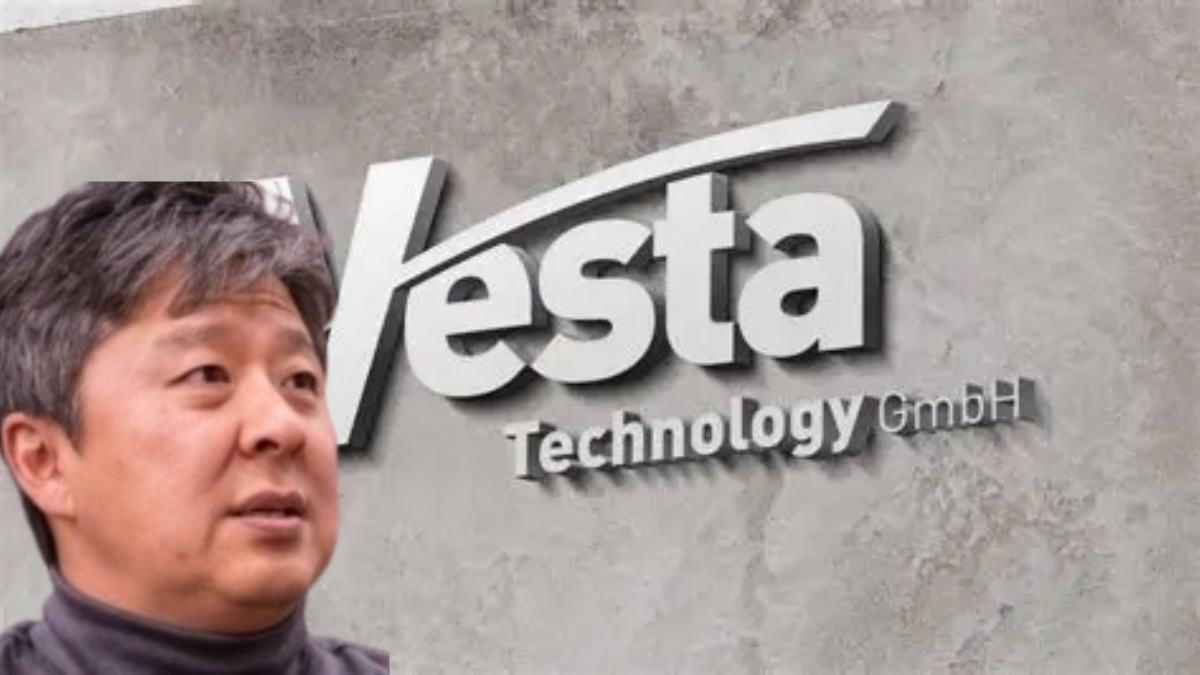
Discover how Chuck kim vesta technology is redefining chip manufacturing. Learn how innovations in ALD, high-k films, and advanced deposition are shaping the semiconductor industry’s future.
In the fast-moving world of semiconductor equipment and materials, one figure stands out for his strategic vision and technical leadership: Chuck Kim. During his tenure at VESTA Technology, Inc., Kim leveraged his engineering background and business savvy to steer the company through a critical phase of innovation and change — and in doing so, he helped shape how next-generation chips are manufactured. This article explores Chuck kim vesta technology roadmap, and how this is rippling out across the chip-making industry.
Early career and arrival at VESTA Technology
Before his time at VESTA, Chuck Kim built his foundation in the semiconductor equipment sector. According to his professional profile, he held leadership roles across multiple geographies at equipment providers such as ASML Holding N.V., Silicon Valley Group (SVG) and Watkins‑Johnson Company. His academic credentials include a Bachelor of Science in Electrical Engineering & Computer Science, and an MBA in International Business from Santa Clara University.
When he joined VESTA (as Executive Director then Vice President and General Manager of the U.S. operation) the company was positioning itself to ride the wave of atomic-layer deposition (ALD), high-k dielectrics, and other advanced process integrations needed for the 65-nm, 45-nm and beyond logic nodes. (VESTA’s U.S. base is in San Jose, California.)
His arrival coincided with a time in which semiconductor manufacturing was under intense pressure: scaling transistors, moving to 300 mm wafers, integrating new materials, requiring dramatically more precise film control. In this context, VESTA had to transform from being a niche equipment supplier into a technology partner for major foundries and logic manufacturers.
VESTA’s strategic pivot: ALD, high-k films and advanced deposition
Chuck kim vesta technology made several strategic decisions that aligned with the broad industry shifts in chip manufacturing.
Embracing ALD and positioning for the nano-era
The adoption of atomic-layer deposition (ALD) in the semiconductor industry was becoming a necessity by the early 2000s rather than a novelty. ALD offered ultra-thin films with remarkably uniform thickness and conformality — essential for high aspect-ratio structures, gate stacks, DRAM capacitors and other critical elements of advanced nodes. As one industry article noted:
“ALD deposits ultra-thin films one atomic layer at a time… ALD is still in the early stages.”
In this environment, VESTA under Chuck Kim’s guidance entered into a notable partnership: an exclusive agreement with Integrated Process Systems Ltd. (IPS) of South Korea, to supply ALD and related equipment worldwide. The company announced:
“ALD will be the key technology for nano-generations,” said Chuck Kim, Executive Director, VESTA Technology. “Utilizing a showerhead and patented ozone process technology VESTA is well positioned to meet current and future process requirements for ALD applications.”
This positioning demonstrates how Kim viewed ALD not as just another tool, but as a strategic enabling platform — one that would differentiate VESTA and open doors into the high-end of chip manufacturing.
Developing high-k dielectric films and enabling nodes beyond 45 nm
Another focal point of VESTA’s technology roadmap was the development of “super high-k” films for DRAM, flash memory, and logic gate stacks. In July 2007, VESTA and the Advanced Technology Development Facility (ATDF, a subsidiary of SEMATECH) announced a new film technology:
“Super k films, designed for processing at nanotechnology scales… In combination with VESTA’s ALD system… manufacturers can use existing DRAM capacitor designs at the 45 nm technology generation.”
This underscores a core strategy: rather than relying on brute scaling (just smaller nodes), VESTA aimed to enable existing manufacturing architectures to extend further via new materials. That approach is central to how many process equipment companies remain relevant as physics scaling becomes harder.
From R&D to production: scaling throughput and reliability
It’s one thing to develop exotic films and deposition processes in the lab; it’s another to bring them into production fabs with the throughput, yield and reliability required for high-volume manufacturing. Kim and his team at VESTA recognized that and addressed it. For example, in a December 2006 announcement:
“VESTA Technology, Inc. has announced the shipment of a follow-on order of its next-generation single wafer ALD/CVD Metal System, VULCAN™ to a major Japanese semiconductor company which will be used for < 45 nm and next generation logic devices… This order follows on a successful qualification of the existing Nano-ALD System at our customers’ site in Japan.”
This shows that under Kim’s tenure, VESTA was able to convert its technology promise into commercial orders — a key milestone for any equipment supplier.
Kim’s leadership style: bridging technical depth with business vision
One of the reasons Chuck kim vesta technology stands out is his ability to straddle both the engineering and commercial sides of the business. With his academic background in EE/CS and his MBA, he exemplifies a hybrid profile: technically literate enough to understand deposition modules, thin-film chemistry, and wafer processing; and commercially capable enough to negotiate partnerships, develop go-to-market strategies, and direct business growth.
A few characteristics of his leadership are worth highlighting:
- Strategic foresight: Kim recognized that deposition technologies like ALD were moving from R&D into production — and he positioned VESTA accordingly. As he said in 2004: “ALD will be the key technology for nano-generations.”
- Partnership orientation: Rather than try to do everything in-house, VESTA under his guidance partnered with other companies (e.g., IPS) as well as research foundries (e.g., ATDF) to accelerate development and broaden its value proposition.
- Customer-centric mindset: The shipments and order follow-ons (like the VULCAN system order in Japan) indicate that Kim prioritized delivering production-ready solutions that met customer demands for throughput and reliability.
- Global perspective: With his international business education and experience spanning the U.S., Korea and other regions, Kim helped VESTA navigate the global nature of chip manufacturing — where design houses, foundries, equipment makers and materials suppliers all span geographies.
These attributes helped transform VESTA from a smaller equipment player to a challenger in the high-end of chip-manufacturing process equipment.
Impact on chip manufacturing and the industry
While it would be simplistic to credit one person or one company with shifting the entire chip-making industry, Chuck Kim’s work at VESTA nonetheless contributed to several meaningful shifts.
Enabling advanced nodes through material innovation
The transition from planar transistors to more advanced nodes (and later FinFETs, gate-all-around, etc.) required new materials, new film stacks, and new deposition technologies. VESTA’s work on high-k films, ALD systems, and production-level equipment under Kim’s guidance helped enable semiconductor manufacturers to bridge the 65 nm, 45 nm and sub-45 nm generations with greater manufacturability.
For example, the Super-k film announcement in 2007 mentions enabling DRAM and flash applications at 45 nm using existing designs by leveraging innovative materials.
Shifting industry focus from feature-size alone toward materials and processes
Kim’s emphasis on deposition technology underscores a broader industry trend: as lithographic scaling becomes harder and more expensive, the semiconductor industry increasingly looks to new materials (high-k, metal gates, novel interconnects) and advanced process modules (ALD, CVD, etch, CMP) to maintain performance gains. The ALD market discussion from 2005 illustrates this evolution:
“ALD is still in the early stages … Only a finite number of customers are deploying ALD today.”
But companies like VESTA under Kim helped push ALD toward broader adoption by proving production systems, forming partnerships, and delivering results.
Raising the bar for equipment suppliers
The semiconductor equipment ecosystem is highly demanding: customers (chip foundries, memory makers, logic fabs) expect tools that not only meet technical spec but are reliable, high throughput, integratable, and globally supported. By securing repeat orders (like the Japanese customer for the VULCAN system) and demonstrating business case viability, VESTA under Kim’s leadership validated the model for smaller suppliers to compete.
Thus, Kim’s leadership at VESTA helped raise expectations in the equipment supplier community: you cannot just have a cool tool; you must prove it in production, global support, customer trust and roadmap alignment.
Challenges and how they were approached
No story of innovation and growth is without challenges. Some of the major hurdles VESTA (and by extension Kim) had to deal with include:
- Throughput and scalability of ALD: Historically, ALD methods were slow compared to CVD/PVD, making adoption at high-volume manufacturing (HVM) a challenge. The industry commentary noted that ALD was “still
in early stages” and that many vendors might not survive. - Material integration and process complexity: Introducing new high-k films or novel deposition modules into existing fabs means integration risk: mismatches with existing thermal budgets, throughput targets, yield requirements, and reliability expectations. VESTA tackled this by collaborating with research-foundries (like ATDF) and demonstrating low-temperature processing innovations.
- Competitive pressure and market consolidation: The ALD equipment market was crowded, and many smaller vendors either exited or were acquired. VESTA’s partnership strategy and channel of focusing on high-performance modules helped it navigate the shake-out.
- Global manufacturing dynamics: With manufacturing shifting globally (especially to Asia), equipment suppliers needed global support, local service, and awareness of multi-geography supply-chain issues. Kim’s global business experience was important here.
The approach was systematic: invest in both technology (e.g., single-wafer ALD, plasma anneal modules), partnerships, customer engagements (e.g., demonstration facilities), and business models that address production-fab realities.
Case in point: The VULCAN™ Metal ALD/CVD System
One tangible manifestation of VESTA’s strategy under Kim is the VULCAN™ system, a next-generation single-wafer ALD/CVD metal deposition platform. In 2006 the announcement of a follow-on order to a major Japanese customer for <45 nm logic devices included this tool.
What’s notable about this is that the tool didn’t simply offer ALD; it combined ALD and vapor phase deposition (VPD) in the same module, allowing high throughput while preserving film quality — a practical compromise between performance and productivity.
This reflects a key principle: tools must not only meet the “nice to have” advanced specs but must also fit into real fab economics and workflows. Kim recognized that and positioned VESTA accordingly.
The broader ripple effect and what it means for future nodes
By guiding VESTA through this transformational period, Chuck Kim contributed to a broader set of industry implications.
- Enabling logic and memory manufacturers to push nodes further: The innovations in deposition, materials and process modules help chip makers sustain performance, density and cost improvements even as lithography scaling slows.
- Encouraging equipment suppliers to diversify and partner: Smaller equipment firms can no longer survive by only offering incremental tools; they need to provide system-level value, partnerships, and scalability — a model that VESTA exemplified under Kim.
- Advancing the convergence of disciplines: The semiconductor manufacturing ecosystem increasingly needs engineers who understand chemistry, materials science, device physics, process integration, and business modelling. Kim’s background is representative of this hybrid skillset.
- Preparing for next-generation transitions: As the industry moves toward 3D structures (fin, gate-all-around), heterogeneous integration, advanced packaging, and even more material innovations (e.g., extreme ultra-violet (EUV) lithography interactions, novel interconnects), having deposition and materials suppliers with proven integration and scale-up capabilities becomes even more critical.
In short: Kim’s leadership at VESTA arguably helped set the stage for the era in which process equipment is as important as pure patterning in achieving the next leaps of semiconductor performance.
Reflections and legacy
Looking back, one can assess Chuck Kim’s time at VESTA as a meaningful chapter in the evolution of chip manufacturing. He didn’t invent ALD (that’s a broader academic and industrial innovation) but he helped mature its commercial adoption, align it with high-k materials, and position a tool vendor to address real fab challenges.
His approach provides several lessons:
- Technology must align with manufacturability: It’s not enough to have an advanced concept; you must convince fabs of throughput, yield and support.
- Partnerships accelerate innovation: Rather than building everything alone, engaging research foundries, material suppliers and global channels multiplies impact.
- Global mindset matters: Semiconductor manufacturing is inherently global — suppliers, fabs, and R&D are dispersed worldwide. Business leaders must operate accordingly.
- Process tools remain critical: As lithography slows, other process modules (deposition, etch, materials integration) become central. Suppliers who focus there will have outsized influence.
While VESTA Technology may not have become a household name like some of the larger equipment suppliers, its work behind the scenes under Kim’s guidance contributed to enabling the nodes and materials upon which many of today’s chips run.
Looking ahead: What’s next and how the foundation laid matters
As the semiconductor industry now advances beyond 5 nm, heads toward 3 nm and considers 2 nm, even more complex process and materials challenges lie ahead: gate-all-around transistor structures, nanosheet devices, new barrier metals, integration of heterogeneous architectures, advanced packaging, etc. The foundation work done by companies like VESTA — building scalable deposition systems, integrating new materials, and proving viability in production — becomes even more relevant.
For Chuck Kim, the move from VESTA into later roles (including at Avaco Co., Ltd.) shows that his expertise and leadership remain sought after in the broader equipment universe.
In many ways, his story illustrates how leadership in the semiconductor equipment sector is not just about inventing things but about bridging innovation with manufacturing, business with technology, and regional dynamics with global markets. For aspiring leaders in chip manufacturing, Kim’s career path offers a compelling template: deep technical grounding, a strategic business mindset, and a global, partnership-oriented approach.
Conclusion
The semiconductor industry is often framed through its headline technologies — the shrinking line widths, the next lithography node, the amazing new chips powering AI and mobile. But behind those headlines are the unsung heroes: the process tools, the materials, the deposition systems, the equipment companies that make it possible. In this ecosystem, Chuck kim vesta technology stands out as a meaningful chapter.
By championing atomic-layer deposition, high-k dielectric films, production-ready equipment platforms, and global partnerships, Kim helped VESTA transition into a serious contender and helped chip manufacturers push toward the nodes that underpin today’s devices. His blend of technical depth, commercial acumen, and strategic foresight is a reminder that in semiconductor manufacturing, the difference between possibility and production often lies in that intersection.
As chips continue to advance and the road ahead includes even greater materials and process complexity, the legacy of people like Chuck Kim — bridging the gap between innovation and scale — will remain vital. The industry may not always spotlight them, but their influence is embedded in every wafer, every transistor and every system that carries forward Moore’s Law in new form.
[…] rest of the code identifies the size, design, and specific engineering of the bearing. The important point is that this is a sealed bearing meant for tough environments. […]