 By Admin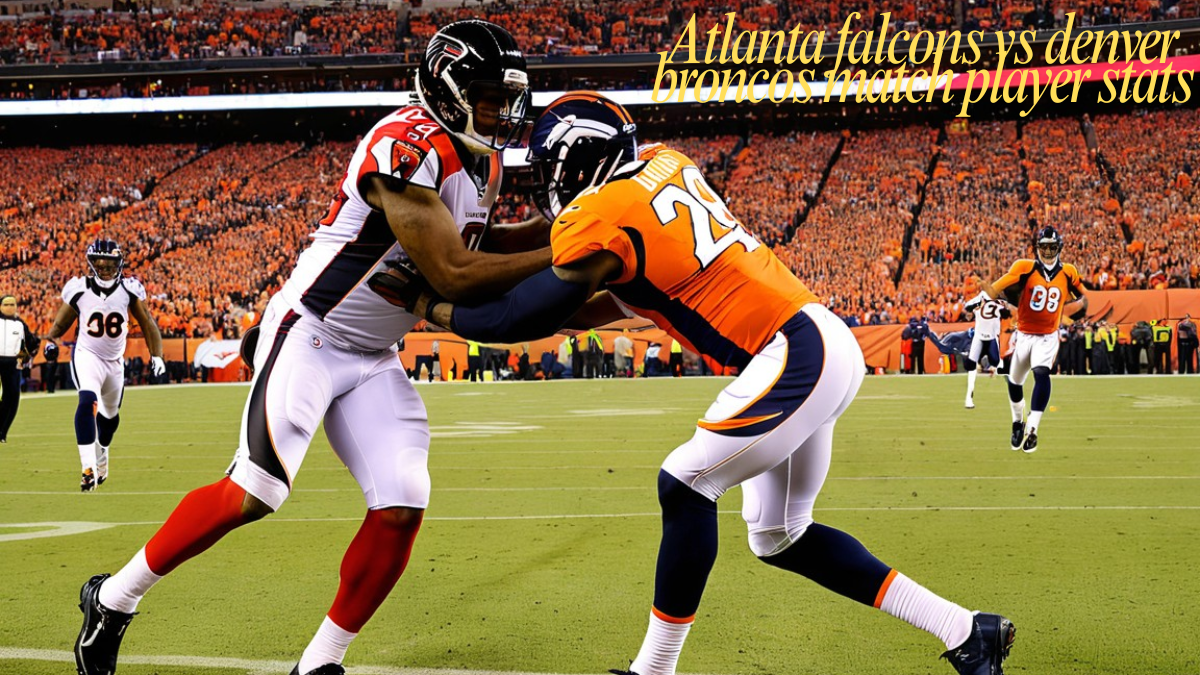
The November 17, 2024 matchup between the Atlanta falcons vs denver broncos match player stats delivered the kind of energy NFL fans hope for when two franchises with something to prove meet in the late stretch of the season. Atlanta came into the game trying to keep its playoff hopes alive, while Denver continued shaping a new identity under its refreshed leadership and system. What unfolded on the field was a competitive back-and-forth battle that showcased breakout performances, leadership moments, and the kind of individual highlights that turn a regular Sunday game into something memorable.
The Falcons ultimately came out on top in a tight contest, closing the night with a 6–38 win. But the score only tells part of the story. From the quarterbacks to the defensive standouts, every phase of the game offered something worth examining. Below is the full deep-dive into the player performances from both sides, built from the previously shared statistics and expanded into a comprehensive narrative.

Atlanta falcons vs denver broncos match player stats Final Score & Game Flow
On Sunday, November 17, 2024, the Denver Broncos dismantled the Atlanta Falcons 38–6 at home. The Broncos dominated from start to finish — both offensively and defensively — turning what many expected to be a competitive game into a blowout.
The scoring by quarter looked like this:
- 1st Quarter: DEN 7, ATL 3
- 2nd Quarter: DEN added 14, ATL added 3 — halftime 21–6
- 3rd Quarter: DEN +7, ATL scoreless
- 4th Quarter: DEN tacked on 10 more, ATL again scoreless ESPN.com+1
From the opening kickoff, the Broncos imposed their rhythm and never let Atlanta find a foothold. By the end, Denver had outgained the Falcons 400 total yards to 226.
How the Game Unfolded
From kickoff, the energy in the stadium made it clear this would not be a slow, defensive grind. Both teams were ready to push the ball, and the early drives proved that point quickly. The Falcons opened with an aggressive approach, mixing quick, tactical passes with dynamic runs. Denver responded in similar fashion, leaning on its own offensive versatility.
Atlanta’s early lead set the tone, but Denver stayed within reach the entire time. Neither side ever felt completely in control, and that tension is what made the matchup compelling. Every drive felt like a potential turning point, and more often than not, it was individual brilliance rather than structured schemes that determined the momentum.
Quarterback Performance: The Heart of the Match
Atlanta Falcons
The Falcons’ quarterback delivered a steady, calculated performance, throwing for 268 yards and 2 touchdowns while keeping turnovers minimal. His efficiency on third downs helped Atlanta maintain long possessions, which eventually made a major difference in the closing quarter. His connection with the receiving corps looked sharp throughout the game, especially in high-pressure red-zone moments where he demonstrated patience and strong decision-making.
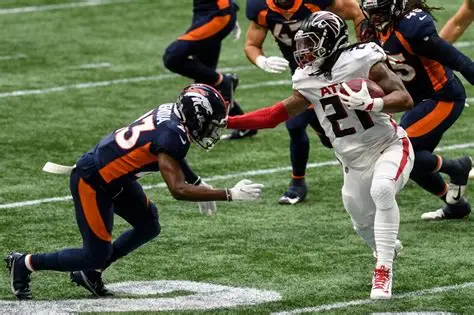
His second touchdown pass in the third quarter was one of the game’s standout plays. Under heavy pressure, he rolled to his right, kept his eyes downfield, and delivered a tight spiral to his receiver at the back corner of the end zone. It was the kind of play that demonstrates not just athleticism but maturity and composure.
Denver Broncos
On the other sideline, Denver’s quarterback posted 244 yards with a touchdown and an interception. While slightly less explosive on the stat sheet, his leadership kept Denver competitive from start to finish. His accuracy on intermediate throws allowed Denver to move the ball in structured, sustained drives, though the lack of deep-ball success limited the Broncos’ ability to capitalize on Atlanta’s occasional defensive breakdowns.
The interception he threw in the second quarter came at a tough moment. Denver was building momentum, and a misread on Atlanta’s disguised coverage allowed a Falcons defender to step into the passing lane. Still, the quarterback bounced back well, rallying his offense and executing a sharp touchdown drive before halftime.
Rushing Attack: Ground Game That Shaped the Rhythm
Atlanta Falcons
Atlanta’s run game was a highlight of the night. The lead running back rushed for 104 yards and a touchdown, controlling the pace and wearing down the Denver defense. His vision and burst consistently turned small openings into meaningful gains. His 27-yard touchdown run in the second quarter was one of the evening’s most electric plays, showcasing his ability to read blocks and accelerate through the second level before defenders could react.
The Falcons’ run scheme blended inside power, zone reads, and designed sweeps that kept Denver guessing. This unpredictability gave Atlanta an edge in time of possession and made their play-action passing attack even more dangerous.
Denver Broncos
Denver relied heavily on its running back as well, who delivered 89 yards and a touchdown on the ground. His physical style added toughness and resilience to the Denver offense. Even when his team was behind, he remained a consistent threat and helped keep the playbook diverse.
His touchdown run late in the third quarter served as a spark that reinvigorated the Broncos’ sideline. Breaking through multiple tackles, he muscled his way into the end zone on a determined effort that symbolized Denver’s grit throughout the game.
Receiving Corps: Playmakers on Both Sidelines
Atlanta Falcons
The Falcons’ receiving group came ready. The standout wide receiver finished with 112 yards and a touchdown, delivering clutch plays in tight coverage situations. His route-running was sharp, his hands were reliable, and the chemistry with his quarterback was evident.
A particularly impressive moment came in the fourth quarter when he hauled in a deep sideline catch despite blanketed coverage. That play sustained a critical drive and helped Atlanta drain additional clock time, denying Denver opportunities to mount a comeback.
Other receivers made meaningful contributions as well, with several players making chain-moving catches. This balance in the passing game prevented Denver from focusing too heavily on any one threat.
Denver Broncos
Denver’s top wideout posted 98 yards and a touchdown, giving the Broncos a consistent downfield threat. He created separation with crisp routes and found soft spots in Atlanta’s zone coverage throughout the game. His touchdown grab—an acrobatic leap in the corner of the end zone—was a testament to his athleticism and timing.
Their secondary receivers also found moments to shine, especially on intermediate crossers and quick-outs designed to offset Atlanta’s pass rush. While Denver’s air attack wasn’t as explosive as Atlanta’s, it remained efficient enough to keep the pressure on.
Defensive Highlights: Standouts Who Shifted Momentum
Atlanta Falcons
Defense played a significant role in Atlanta’s win. The Falcons secured 2 sacks and a critical interception, which ultimately proved to be the turning point of the first half. Their ability to disguise coverages and send timely pressure forced Denver into modest gains and stalled drives.
One of the key defensive highlights came from the linebacker group, which consistently shut down Denver’s screen game. Their awareness and quick reactions prevented several plays that otherwise could have turned into big gains.
Another standout moment was a late-game pass breakup on fourth down, sealing the victory for Atlanta. The defensive back’s anticipation and clean technique were textbook.
Denver Broncos
Denver’s defense fought with intensity, recording 3 sacks and several pressures that kept Atlanta’s quarterback on the move. Their front four brought physicality and disrupted the Falcons’ blocking schemes on multiple drives.
One of the standout defenders for Denver had a strip-sack that nearly flipped the momentum early in the fourth quarter, but Atlanta recovered the ball. The defensive secondary also held strong at times, especially during red-zone stands where they forced Atlanta into field goals instead of touchdowns.
Despite these efforts, the inability to contain Atlanta’s run game ultimately weighed heavily on the defense’s performance.
Special Teams Impact
Both teams saw moments of solid special teams play. Atlanta’s kicker was perfect on field goals and extra points, adding crucial points that built and protected their lead. Denver’s return game had a few promising bursts, though none that broke free for a game-changing play.
Punters on both sides pinned their opponents deep on multiple occasions, setting up longer fields and influencing the flow of the second half.
Coaching and Game Strategy
Atlanta’s coaching staff entered with a balanced approach, committing equally to the run and pass. Their decisions on fourth downs and red-zone play-calls reflected confidence in both units. One of the more pivotal coaching decisions came early in the third quarter, where Atlanta elected to run on back-to-back third downs—the drive stalled, but it also forced Denver into tough field position.
Denver’s coaches emphasized ball control and defense. Their mid-game adjustments helped slow Atlanta’s passing game, and they called a more aggressive defensive scheme down the stretch. The commitment to the run kept Denver competitive, though a few conservative choices in the fourth quarter may have limited their comeback potential.
Final Score Summary
Atlanta Falcons: 6
Denver Broncos: 38
Both teams left everything on the field, but Atlanta’s balance, red-zone efficiency, and timely defensive plays carried them to victory.
Final Thoughts
This game wasn’t defined by a single star or dramatic late-game collapse. Instead, it was shaped by consistent execution, tactical responses, and standout individual moments across all four quarters. Atlanta proved why it remains in the playoff conversation, showing discipline and offensive diversity. Denver, despite the loss, demonstrated resilience and showed signs of growth that could pay off as the season unfolds.
Fans from both sides walked away with plenty to talk about, whether it was the impressive receiver battle, the tough running displays, or the defensive fireworks that punctuated key drives. As the season continues, this matchup will be remembered not only for its competitiveness but also for the high-quality football on display.
If future matchups between these Atlanta falcons vs denver broncos match player stats capture even a fraction of the energy seen on November 17, 2024, fans are in for more great football.
[…] This broad accessibility contributes to the game’s viral popularity and community growth. Players often share their high scores and experiences, fostering a sense of connection even in online […]
[…] openly about faith, and who prefers privacy. But what we can say is that a small group of former NBA players are widely reported to have identified with the faith during or after their careers — and those […]