 By Admin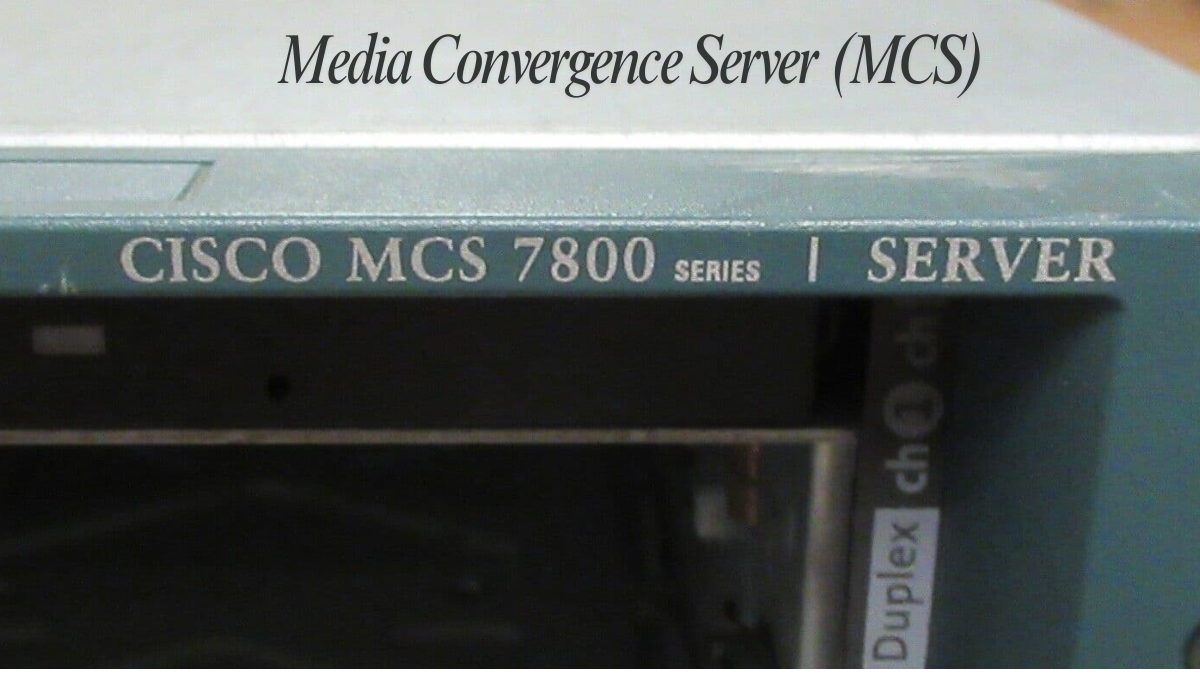
Discover what a Media Convergence Server (MCS) is, how it unifies video, audio, metadata, and communication workflows, and why it has become essential for broadcasters, enterprises, and digital publishers. Explore key features, applications, benefits, and industry relevance in 2025.
Introduction
In today’s fast-moving digital world, content lives everywhere. A single story might appear on TV, digital platforms, mobile apps, social feeds, or even in print. Enterprises face similar challenges as they juggle communication systems, IP phones, conferencing tools, and messaging applications. Keeping everything connected, consistent, and scalable is no longer optional. That’s where a Media Convergence Server (MCS) steps in.
The term itself sounds technical, but the concept is straightforward. An MCS is a specialized platform designed to unify, manage, encode, distribute, and streamline multimedia content across multiple ecosystems. It acts like the central nervous system for organizations that depend on consistent communication and powerful multimedia delivery.
From broadcasters to digital publishers, and from large enterprises to communication networks powered by companies like Cisco, the MCS is emerging as a crucial component in digital transformation—especially in 2025 and beyond. This article takes an in-depth look at what an MCS is, how it works, and why it matters.
Quick Facts: Media Convergence Server (Based on Provided Data)
| Category | Details |
|---|---|
| Definition | A platform that unifies, encodes, manages, and distributes multimedia content across different ecosystems |
| Core Function | Integration of video, audio, metadata, and interactive elements into one system |
| Workflow Support | Ingesting, transcoding, metadata tagging, ad insertion, archiving |
| Distribution | TV, web, mobile, print, and cross-platform content delivery |
| Enterprise Use Case | Cisco MCS line supports 2 to 30,000 IP phones in a cluster |
| Cisco Applications | Unified CallManager, Unity messaging, Contact Center Express |
| Media Use Case | Broadcasters and digital publishers integrate workflows for video, audio, and metadata |
| Advantage | Eliminates separate workflow systems, improves collaboration and publishing speed |
| Scalability | Designed for high availability and mission-critical workloads |
| Why It Matters | Drives efficiency, reliability, and future-proof content strategies |
What a Media Convergence Server Actually Does
A Media Convergence Server sits at the center of content operations. It handles tasks that previously required multiple systems, teams, or disconnected workflows. Instead of having one tool for ingesting files, another for encoding, and another for archiving or distributing content, an MCS pulls everything into a single environment.
Here’s a closer look at what it handles:
Unifying Media Workflows
One of the biggest advantages of an MCS is the consolidation of key processes. It can:
- Ingest raw content
- Transcode and encode into different formats
- Manage metadata
- Handle ad insertion
- Store and archive large media libraries
All of this happens inside one unified platform instead of scattered across separate systems.
Cross-Platform Distribution
Modern content creators rarely publish to just one destination. They need to push the same video or audio to YouTube, broadcast channels, mobile apps, websites, and sometimes even print-linked platforms.
An MCS streamlines that process, ensuring each platform receives precisely the right version of the content.
Improving Collaboration
Editorial, production, and IT teams often work separately. A Media Convergence Server helps bridge those gaps by allowing each group to work within the same ecosystem.
Ad Insertion and Monetization
For broadcasters or digital publishers, ad-supported content is a major revenue source. An MCS can automatically insert ads, track performance, and ensure each version of the content meets monetization requirements.
How an MCS Powers Enterprise Communications
While media companies rely on MCS systems for content workflows, enterprises use them in a more communication-focused way. Cisco’s MCS line is the most notable example mentioned in the information you provided.
Cisco built its MCS servers to support powerful communication applications such as:
- Unified CallManager
- Unity messaging
- Emergency response tools
- Contact Center Express
- Unified conferencing systems
The impressive part is the scalability. Cisco’s MCS can support:
2 to 30,000 IP phones in a single cluster.
For large companies, this means:
- Reliable internal communication
- Centralized user management
- High-availability environments
- Support for call centers, operators, and dispatch units
These systems also handle mission-critical workloads. Hospitals, airports, public safety teams, and global enterprises often depend on them.
Comparison Table: Cisco’s MCS vs. Modern Broadcasting-Focused Media Convergence Servers
| Feature / Function | Cisco’s MCS (Enterprise-Focused) | Modern Media Convergence Servers (Broadcasting & Digital Publishing) |
|---|---|---|
| Primary Purpose | Designed for enterprise communications, IP telephony, messaging, and contact center applications | Built to unify, encode, manage, and distribute multimedia content across TV, digital, mobile, and print |
| Core Capabilities | Hosts Unified Communications apps like Unified CallManager, Unity messaging, conferencing tools | Combines ingest, transcoding, metadata tagging, ad insertion, content versioning, packaging, archiving |
| Content Handling | Focuses on voice, video conferencing, and enterprise media traffic | Handles full multimedia workflows including video, audio, metadata, graphics, and interactive assets |
| Supported Scale | Supports roughly 2 to 30,000 IP phones per cluster, depending on model | Designed to scale across entire media ecosystems, supporting high-volume video pipelines and multi-platform distribution |
| Distribution Channels | Internal enterprise networks and communication systems | TV broadcasting, OTT platforms, mobile apps, websites, digital signage, print CMS |
| Workflow Integration | Streamlines communication tasks for corporate teams | Integrates editorial, production, advertising, and distribution workflows into one system |
| High Availability | Provides mission-critical uptime for enterprise calling and messaging | Offers redundancy for always-on media delivery, live broadcasting, and 24/7 newsroom operations |
| Industry Use Cases | Enterprises, call centers, emergency services, corporate messaging | Broadcasters, streaming platforms, studios, digital publishers, newsrooms |
| Monetization Impact | Improves service uptime and call efficiency, indirectly supporting business operations | Enables new revenue models through content repurposing, cross-platform ads, multi-format publishing |
| Technology Focus | IP telephony servers and communication-centric architecture | Multi-format encoding, media asset management, rights management, AI-powered content workflows |
| Advantages | Reliable, scalable enterprise communications backbone | Central hub for multimedia creation, metadata-rich distribution, and large-scale content convergence |
| Future Role | Continues serving enterprise voice and unified communications | Core engine of digital transformation in the global media industry |
The Media Industry Side: Where Modern MCS Platforms Shine
In broadcasting, digital publishing, and streaming operations, an MCS offers a different kind of value. It becomes the core engine of content creation and distribution.
Where It Fits in the Media Industry
It unifies:
- Video production workflows
- Audio engineering
- Metadata management
- Ingesting content from cameras, studios, or remote contributors
- Preparing content for distribution channels
- Archiving and storing large libraries
Why Media Companies Depend on MCS Systems
The need for speed is critical in modern media. Breaking news, real-time content, cross-platform publishing, and instant updates require systems that can handle everything without slowing down.
A Media Convergence Server enables:
- Faster editing
- Smooth collaboration
- Automated distribution
- Centralized storage
- High reliability
For digital publishers, this also means the same asset can be reused repeatedly across different platforms with minimal manual work.
Reducing Friction in Content Pipelines
Modern workflows can be complex. A Media Convergence Server cuts out unnecessary friction by consolidating everything into one simplified pipeline.
A few examples of friction reduction include:
- No need to manually convert formats
- No need to coordinate between separate editorial and technical teams
- No juggling multiple publishing systems
- No reuploading the same content for each platform
This improves:
- Publishing speed
- Team efficiency
- Content accuracy
- Overall output quality
In an industry where time matters, these improvements have a real impact.
Why High Availability and Scalability Matter
A Media Convergence Server isn’t just convenient—it needs to deliver consistent performance. Whether a company is broadcasting live events, managing communication for thousands of employees, or distributing content to millions of users, downtime is unacceptable.
High availability means:
- Redundant systems
- Automated failover
- Always-on operation
Scalability enables:
- Expanding storage
- Adding more users
- Supporting larger media libraries
- Increasing communication channels
These features make an MCS reliable enough for mission-critical environments.
The Future of MCS: Why It Matters in 2025 and Beyond
Media convergence isn’t just a trend—it’s the backbone of digital transformation. As more companies adopt multi-platform content strategies, an MCS becomes central to their operations.
Efficiency
It eliminates the need for numerous standalone systems.
Reliability
Mission-critical communication and broadcast environments rely on 24/7 uptime.
Future-Proofing
As digital ecosystems expand, a unified system ensures long-term adaptability.
Intelligent Content Reuse
The ability to take one asset and adapt it fluidly across different channels is a key differentiator in today’s media industry.
Communication Evolution
Enterprises continue to shift toward unified communications, and an MCS supports these changes with reliable infrastructure.
In short, the Media Convergence Server is becoming indispensable.
Applications of Media Convergence Servers
Based on the information you provided, MCS systems commonly power three main sectors:
1. Enterprise Communication
Cisco’s MCS is an example of how enterprise organizations use convergence servers to handle:
- Unified CallManager
- Unity messaging
- Call center systems
- Emergency communication
- Conferencing tools
- Large-scale IP phone clusters
2. Media Industry Workflows
Broadcasters and publishers use MCS platforms to unify:
- Video production
- Audio workflows
- Metadata management
- Content ingesting and transcoding
- Multi-platform publishing
3. Content Strategy and Optimization
Many companies rely on MCS systems to boost:
- Content reuse
- Speed of distribution
- Platform consistency
- Monetization through ads or sponsorships
These applications show how wide the impact of a Media Convergence Server can be.
Why Media and Enterprise Convergence Matters
The modern digital landscape is interconnected. Communication, content production, publishing, and distribution now operate in overlapping environments. Without a unified system, organizations face chaos, duplicated work, and delays.
A Media Convergence Server solves many of these problems by allowing teams to work from one centralized hub.
Benefits include:
- Reduced technical complexity
- Faster publishing cycles
- Strengthened team collaboration
- Better content consistency
- Lower operational costs
And perhaps most importantly, it keeps organizations flexible as new technologies emerge.
Final Thoughts
A Media Convergence Server is much more than a technical tool. It is the central hub that keeps modern content ecosystems functioning. Whether used for enterprise communication or media production, an MCS provides unification, scalability, reliability, and efficiency in a world where content demands continue to grow.
From supporting up to 30,000 IP phones in a single Cisco cluster to powering multimedia workflows for broadcasters and digital publishers, the MCS stands at the heart of digital transformation in 2025.
It’s what makes seamless content delivery possible. It’s what drives communication efficiency. And it’s what ensures organizations stay ready for the next wave of digital evolution.