 By Admin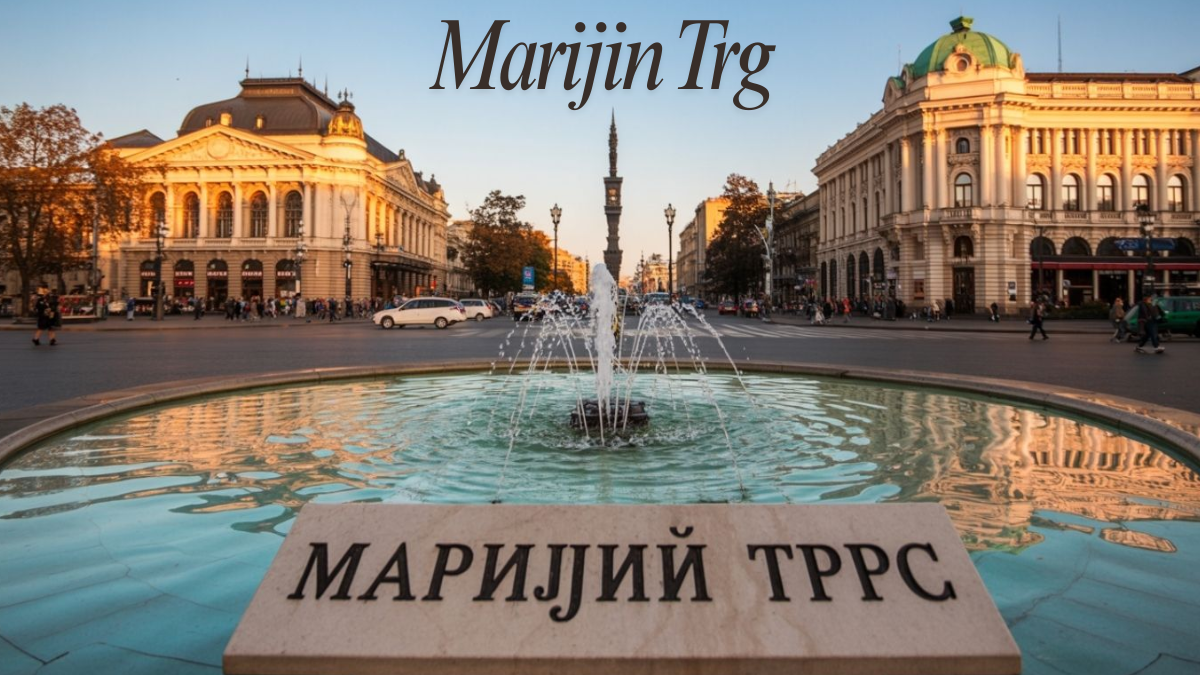
Introduction
Nestled in the city of Belgrade, Serbia, Marijin Trg маријин тр is a modest-sized square that quietly encapsulates centuries of history, architectural layers and cultural vitality. While often overshadowed by more famous city piazzas, this square stands as a remarkable vantage point from which to observe the interplay of past and present, civic memory and urban renewal. This article offers a comprehensive exploration of Marijin Trg: its origins and historical journey, its architectural fabric, and the living culture and events that give the place its pulse.
Historical Roots and Evolution
The story of маријин тр Marijin Trg begins in the 19th century, at a time when Belgrade was undergoing significant transformation. The square’s name is said to derive from Maria Obrenović (or more loosely “Maria”), the wife of a Serbian prince, reflecting the royal associations of the site. The term “Trg” in Serbian means “square” or “marketplace,” so “Marijin Trg” may be understood as “Maria’s Square” or “Mary’s Square.”
In its earliest mentions, the square appears as a gathering and open space connected to urban growth and trade rather than grand ceremonial function. Over time, especially as the city expanded into a modern capital, маријин тр Marijin Trg acquired greater civic significance.
During the early and mid-20th century, the square and its surrounding streets saw post-war reconstruction, evolving urban infrastructure and changing architectural styles. More recently, the square has been linked to large-scale urban regeneration efforts—most notably the Belgrade Waterfront Project—which have reframed Marijin Trg as a gateway between heritage city-centre and new riverfront development.
Thus, Marijin Trg is best viewed as a layered urban site: a place of monarchy, market, culture, and modern city-planning.
Architectural Landscape
One of the most compelling aspects of маријин тр Marijin Trg is its architectural tapestry. Walking through the square and its immediate environs, one is confronted with buildings and spaces that speak of different eras, styles and functions.
Historic Buildings & Legacy
The square is anchored by structures rooted in the late 19th and early 20th centuries, many of them reflecting neoclassical and early modernist designs. One such example is the so-called “Mariinski Palace” (or “Mariinski Palace” in some sources) which is cited as the building that gives the square its name. Though detailed public records about its original architects or exact date of construction are not fully explored in mainstream sources, the palace is described in some analyses as built in the late 1880s and embodying the royal, civic architecture of its time.
Also significant are nearby institutions such as the National Theatre in Belgrade (founded in 1869) which, though not strictly within the square itself, contributes to the architectural and cultural ambience of the area.
Modern Interventions and Urban Renewal
In more recent decades, the architecture around маријин тр Marijin Trg has adapted to new urban usages — glass-fronted offices, mixed‐use developments, pedestrian-friendly paving, public lighting installations, and smart-city infrastructure upgrades. This juxtaposition of heritage façades with contemporary design gives the square its unique character: historical depth combined with modern vitality.
Spatial and Design Features
Public-realm improvements have also been introduced: widened walkways, landscape elements (trees, benches), lighting schemes, and art installations. These design interventions aim to shift Marijin Trg from being simply a thoroughfare to a place of pause and community gathering. As one piece puts it, “the architectural narrative of Marijin Trg reflects Belgrade’s layered history, encompassing styles from neoclassical architecture to contemporary minimalism.”
In summary, the architecture of маријин тр Marijin Trg is not monolithic but plural: heritage and modernity co-exist, inviting visitors and locals to experience a city in dialogue with its past.
Cultural Life and Events
Marijin Trg is far more than a scenic square—it is a living stage of social and cultural engagement. The surrounding cafés, galleries, performing arts institutions, and event programming ensure that the place remains vibrant throughout the year.
Everyday Life & Community Interaction
Even when no formal event is scheduled, Marijin Trg is described as a place where locals gather to meet, relax, and watch the world go by. One write-up notes that it is “a place where locals come to unwind” offering “authentic Serbian hospitality” in nearby cafés and eateries. Street performers, outdoor art installations and spontaneous cultural micro-events routinely occur, giving the square a lively and somewhat informal cultural pulse.
Festivals, Markets and Open-Air Gatherings
The square hosts more structured events as well: food and wine festivals, artisan markets, open‐air concerts and seasonal fairs. For example, it features in discussions of events such as “Belgrade Summer Nights,” an annual festival drawing thousands of participants. During winter months, holiday markets and craft fairs further transform the square into a festive venue.
These activities help amplify маријин тр Marijin Trg’s role beyond mere transit space to a cultural node.
Civic & Social Role
Historically and contemporaneously, squares like Marijin Trg serve as places of civic assembly. While detailed scholarly records of major political events in the square are less prominent in popular sources, the general recognition of the square’s role in public life is evident: “…the square became a focal point in the urban design of Belgrade. The surrounding streets began to feature a mix of neoclassical and modernist architecture, making the area both a cultural and architectural hub.”
In the modern urban-planning context, Marijin Trg is also part of inclusive design efforts — pedestrianisation, improved accessibility, and sustainable landscaping are being highlighted.
Location, Connectivity & Urban Context
Marijin Trg benefits from a prime location within Belgrade’s city-centre urban fabric. It sits in the municipality of Savski Venac (and/or adjacent to other central districts), linking key areas of the city.
Its connectivity is strong: public-transport routes converge in this part of town, and the square acts as a gateway between the older historic city core and newer riverfront developments along the Sava River. This makes Marijin Trg not only symbolically but practically important in the daily life of Belgrade.
In the wider urban strategy, the Belgrade Waterfront Project has placed the square within a transformation zone — upgraded pedestrian walkways, smart-city amenities, bike lanes and enhanced public realm have all been proposed or implemented.
What to See & Do Around маријин тр Marijin Trg
If you plan a visit (or simply wish to explore conceptually), here are features and activities around Marijin Trg that are worth your attention:
- Architectural stroll: Walk around the square and explore the façades of late-19th and early-20th century buildings, layered with modern additions. Notice details such as wrought-iron balconies, neoclassical columns and more recent glass-front “retrofits.”
- Café culture: Sit at an outdoor café, enjoy local fare, watch the passers-by, and soak in the layered ambience of historic city and contemporary life.
- Cultural events: Check local listings for any open-air concerts, artisan markets or seasonal festivals taking place at the square. These often are FREE and public.
- Neighbourhood explorations: From Marijin Trg you are within walking distance of other central Belgrade landmarks, museums, galleries and river-front promenades—making it an ideal starting point for deeper urban exploration.
- Photo-moments: The contrast of old and new architecture, public art installations and pedestrian friendly spaces make for excellent photographic backdrops.
Significance and Reflections
Why is Marijin Trg important beyond just being another city square? Several reflections may be offered:
- Encapsulation of change: The square reflects the layered history of Belgrade—from its royal and mercantile past to its socialist and post-socialist urban chapters and now toward modern globalised urbanism.
- Model of urban continuity: Rather than replacing the old, Marijin Trg demonstrates how heritage and modernity can coexist in a city centre—a lesson for many urban planners in other cities.
- Cultural micro-cosm: Though not enormous, the square punches above its weight in terms of cultural and social presence. It shows how public-space design and event programming converge to produce place-making.
- Gateway to future: With its role in the Belgrade Waterfront initiative, Marijin Trg stands at the threshold of Belgrade’s future while grounded in its past.
Challenges and Considerations
Of course, the square is not without its challenges. Some of these include:
- Balancing preservation and development: As modern constructions and commercial pressures increase, maintaining the historical fabric and human scale of the square remains a delicate balance.
- Traffic and urban pressure: Central city squares often face issues of congestion, noise, and over-commercialisation; the pedestrian-friendly aspirations must continually be defended.
- Event saturation: While cultural events enliven the space, over-use or poorly managed crowds may threaten the sense of calm, the architectural dignity or heritage ambience of the square.
- Inclusivity: Urban spaces must serve all citizens—not just tourists or commercial interests. Ensuring that Marijin Trg remains a democratic space for locals is an ongoing consideration.
Conclusion
In summary, Marijin Trg is a microcosm of Belgrade’s past, present and future. What began as a modest square named for a royal figure has grown into a multifaceted urban space: architectural palimpsest, cultural stage and civic connector. It invites visitors and city-residents alike to linger, reflect and engage.
For the traveler to Belgrade, the square offers more than a quick photo-stop—it provides a meaningful moment of encounter with layered history, architecture, urban design and cultural life. For the urbanist or historian, it offers a case study in how a mid-sized square within a capital city can sustain relevance through adaptation, programming and design.
Whether you arrive for café-side people-watching, attend a summer concert under the open sky, explore the façades of historic buildings or simply pause in between more-touristed sites, Marijin Trg rewards with subtle richness. In the hustle of a growing metropolis, this square remains a generous space—open, layered, alive.
Metadata – Quick Facts
Location: Central Belgrade, Serbia (in or near the municipality of Savski Venac) Evolve Feed
- Name origin: “Marijin” = Maria (or Mary), “Trg” = Square/Marketplace businesscitynews.co.uk
- Historical layers: 19th-century origins, royal governance associations, early 20th-century urbanisation, post-war rebuilding, 21st-century regeneration.
- Architectural character: Neoclassical and early modernist heritage buildings, interspersed with contemporary development and pedestrian realm upgrades.
- Cultural uses: Regular festivals, open-air concerts, artisan markets, street-life and café culture.
- Urban role: Connective node between historic city centre and waterfront redevelopment zone; significant public-space role in Belgrade’s urban identity.
[…] share long, reflective journals about months spent abroad. Others post short snapshots of a single meaningful encounter. Together, these stories form a global tapestry of […]
[…] the platform works, why it resonates with so many people, what makes it different from traditional history resources, and how it can enhance travel, research and everyday understanding of the world. By the […]